Thursday, March 29, 2012

Aha...

I had lunch with Margaret yesterday and found out that she had everyone's e-mail addresses and sent e-mails twice a week as reminders.  So, I will get  your e-mail addresses on Monday...

And also I found out that she had small groups every week, each student having at least 6 digital or black and white prints each week. I'd prefer 10. So we'll start that Monday........and continue on the next Monday. I used to have small groups all the time, but the fact that folks hadn't been doing digital work prints had stopped me...but now that you're doing that, we'll start small groups.

Wednesday, March 28, 2012

Just to reassure you....

I want to say that don't give myself any credit if you produce really interesting projects.

During a critique I might remind someone, as I reminded Carrie, that I prodded her to  do something more with her Arizona photographs --- but I did that only because some of you clearly don't like my nagging and I want to prove that it's possible to live through my telling you, "This isn't enough, no, not enough work," and come up with a really interesting solution...  

And I won't really kill myself if you don't come up with a really interesting final project or if you stop working on a really interesting project to focus on shadows or if you don't commit yourself to two clear ideas and stop fussing around. No, I'm not going to to that, no matter how much I enjoy trying to tease you into action.

I do suffer for a couple of hours during grading. I hate to give grades and would prefer that this was the sort of school where no grades were given. But it isn't. So, I suffer briefly. But, unfortunately I do have to give grades. And unfortunately some folks don't do enough work for a B. So, I suffer a bit.

But you are adults and can make your own choices.

And you might decide to go to Boston College, tomorrow, Thursday, at 10:15, to hear three important war photographers speak...in the Murray Function Room, 4th floor in the Yawkey Center.

Sunday, March 25, 2012

Zoe Strauss Introduction

I'm assuming that each of you will read the Xerox copy of the introduction that Zoe Strauss wrote about the I95 project to accompany her mammoth book and the huge show at the Philadelphia Museum of Art.

You might borrow a copy and return it after a few days....or read it in class. (WHICH LEADS ME TO THE FACT THAT YOU MUST HAVE WORK TO DO IN CLASS, ALL CLASS...and not forget some important gadget or whatever, please, or leave class early. It ends at 5.)

We'll discuss her writing next week. I admire this piece and am particularly interested in your take on why she conceived of this enterprise as taking ten years. I imagine that's a hard concept for students in a university who are taking 4 or 5 subjects, at least one of which is a studio course, and taking 20 rolls of film or 500 digital pictures a semester.      I, on the other hand, find it a remarkable and refreshing way of planning a long-term adventure.

And I'm interested in what categories you might chose to photograph if you were to start on such a project...how would you think that out.

And I'm interested in your general ideas/reactions/thought.....about what she wrote, her "everything," the additions she thought necessary for the final project, the difference between and the definitions of the intuitive and the intellectual decisions she has been constantly making.

I had originally hoped you would read her blog, but that's not really necessary since so much was about the show. However, she had a good entry with a photo of herself in a hoodie and a discussion of whether she, a small, 41-year-old-white=woman would have been shot by George Zimmerman if she'd been walking through the enclave where he was a Neighborhood Watch captain carrying a gun!

I hope I don't need to say that if you have chosen to work in the darkroom, you are buying your 20 rolls of 36 exposure film, developing it, cutting it down, making contacts, choosing what to print......making a work print, looking at it with other work prints and then making final prints of what you've chosen.      THAT IS MUCH, MUCH, MUCH MORE TIME CONSUMING than taking digital photographs...

so if you're working with digital, you have to take many, many, many more images...and use many, many more in your project. You have not gotten your hands wet, so to speak, and had a far easier time of it, in so far as taking interesting, insightful photographs can ever be easy.

Unfortunately, I forgot my camera when I was walking the dogs past a stick structure someone made in a park near Target, sticks bent in half to create the illusion of a roof. Here it is after a wind storm.

Sunday, March 18, 2012

Reminder

Just to remind you that lab hours should be noted in the lab book each week. And that they are different from the hoursyou are expected to spend each week taking photographs...that's equivalent to what you'd spend reading or writing if this were a course that required that. Therefore, your projects must reflect many hours of time spent on photographing. Any idea, no matter how interesting, that could be completed (but for the printing) in a couple of hours just doesn't represent enough work for a whole project....

I see my role as that of an Australian sheepdog, nipping at your heels, to keep you on track toward doing enough interesting work to produce a project that will at least receive a grade of B. Beyond that, my goal is to push you to take risks, stretch yourself, try something difficult and  really think about what you want to say with your images.

You will might think, oh, she's putting up all these hoops that we have to jump through, and that's true. That's the nature of this endeavor. My goal is for everyone to at least get that demanding B. I'm not always successful, but I try very hard. 

If you received a grade lower than B, you're more than welcome to resubmit more work. I haven't graded some projects because there wasn't enough or because I think you've just started a semester long project. 


Goats are often comforting for Thoroughbred horses, keeping them company, and calming then in the stalls. This particular goat also acted as a guard dog, immediately noticing if anyone strange was walking down the shed row and butting them.


Hopefully you will have read the earlier post and that you will have had a good, productive vacation.

Oh, one more thing, some of you have had real trouble in printing because the image on the screen is so different from what is produced by the printing. It would be alright to bring your laptop and show your images on the screen....that means you'll have to get to class early so Kevin can be sure that the right connector is available.

Tuesday, March 6, 2012

onward...

Yesterday morning, I went out to the 8th Pole, in the barn area of Suffolks Downs, to do an interview with Adam Ragussea of WBUR about this recently published book...

and so I was very pleased to see all the work you folks put up.

Just a few words before vacation...and as you move on to continue your projects or to start a new one or ones...

It's fine to be working on two visual tracks. For instance, Andrea put up very clean, nicely composed, quite visually simple images of the signs that she's beset by during her time in Boston...and she put up much more complex images about the visual clutter she finds...she's chosen to work on the more difficult project...and may, or may not, be able to incorporate the simple photographs (maybe as visual chapter headings.) But that doesn't matter...she had many camera struggles, did a lot of work in a short time when she finally could, printed quite a few images and is clearly thinking about and working on what interests her -- the more cluttered, noisy images.

If you're working in the darkroom, make fast work prints (not perfected prints) so that you have a group...then put them up and look at them, make decisions about the most effective, interesting images, and the direction you'll take in your next roll of film. Do the final prints much later on because they take much more time.

The whole point of doing projects (a project, three projects) is investing in them...picking a topic that's difficult, that involves coordinating successfully with your subjects or spending a lot of time walking around, hunting them up, looking at the results and going back out for more. Projects take time. Any set of images that could be done in an afternoon isn't a project...though you might do a set of images in an afternoon and then pick the best and add those to the next set of images done in the morninng...and so on...  

So, please think investment -- the complexity of your idea and the time you're spending on working with it. And please think about risk -- moving out of what you can do comfortably     Or taking what you can do comfortably up another notch.  And if you've taken the Workshop before, remember that you're also taking that experience forward, pushing up another notch, doing something more difficult.

In grading, I will put more emphasis on your most developed project. So, if you had trouble starting or grasping the concept of extended projects in which the images support each other to develop a visual idea/thought, don't worry.

And if you're showing your work after the break, don't worry.
If you had a hard time achieving what you know you want, and it takes another week AFTER the break, don't worry. It's more important that you have really struggled to get a set of photographs that you care about.
And if you want to add more to what you have already shown, feel free to do it.

Tuesday, February 28, 2012

Next Monday


I realize that having had that Monday vacation wasn't the best thing for many of you. Two weeks in between.

And that a once-a-week class is very difficult to remember.

And that you have other classes, etc...

And that two of you have had serious camera problems.
For those of you with working cameras,  I'd assume 6 or 8 rolls of film would be taken by now.

Thanks to Meghan, Martyna and Tunisia for finding other MACs with photoshop in the library. The MAC lab is open for most of our class time.

IMPORTANT NOTE: THE MONITORS AND PRINTERS IN THE PHOTO LAB ARE NOT CALIBRATED SO THAT WHAT YOU SEE ON THE SCREEN IS NOT WHAT YOU'LL GET AS A PRINT.   I'd advise trying a test print and then it will be easier to figure out how much to lighten or darken your image on the screen to get closer to the print you want.

CARRIE, I DON'T THINK THAT I EXPLAINED HOW TO USE THE DRY MOUNT PRESS...Please ask Kevin...basically, you tack the tissue on the back of the print (small touch, leaving a quarter size heated area in the center...) and then you cut the print (using sharp knife and a metal rectangle) and then you carefully place it on the page and tack the TISSUE on the top two corners...and put it between the two sheets of cardboard in the PREHEATED dry mount press...make sure it's heated to the temperature of the paper you're using...RC takes a lower temperature than fiber...   and I think we talked about fine-point magic markers...Blick is a good place to buy them ...

There is no work-time during the next class.

Let's hope there's a good showing on Monday. I realize that some of you are behind and will catch up during vacation which starts on the 12th. If you are working on two ideas, please show both of them even if neither is completed. Remember that you might decide to continue on with this project for the whole semester. Or you might have another idea.

The drop or pass/fail day is on the 14th which is during vacation. If you're very worried about a grade, give me your e-mail and I'll mail it to you before then.

After the class on the 19th, there will be five class days before the presentation of the final project(s) on the 7th of May. (There's another week in there, but there's another one of those Monday vacations.)

To answer one question, yes, if you do take 20 minutes to take a photograph with a digital camera, you don't have to take a number of them. But most people take more because of the situation. For instance, I should have played around more with the first and second photo on the catwalk, especially  since that architectural drawing won't be there again..I took two of the man standing in the road by the new building.       I was in a hurry...

In taking abstractions or landscapes, I realize that a photographer is capable of concentrating and deciding on a well-composed image. That's the principle of the large-format camera. However, most people still explore by taking a number of photographs, even those who are set up with a tri-pod because afterwards, you might want the placement of the horizon, for instance, to vary a bit.  


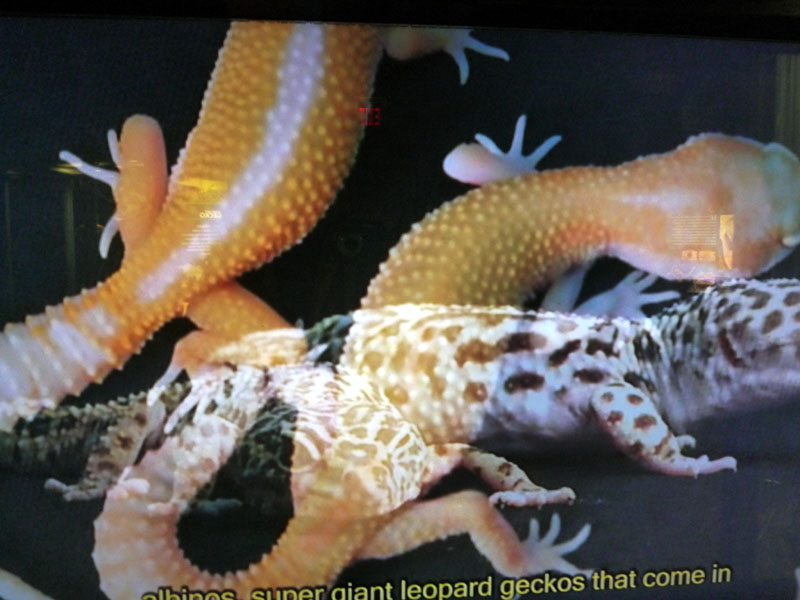
A fellow formed a company breeding designer geckos in Texas...they, in his mind, become living art...and he describes the process of setting aside the number of eggs he wants to become females in an 80 degree room and those he wants to become males in a 90 degree room. Once they hatch, he checks the babies for unusual designs so they can be bred. It took him 30 generations of geckos to start making these fanciful creatures which he probably sells for a pretty penny. This was all described in a 2 min and 54 second vido at the Museum of Science gecko show.
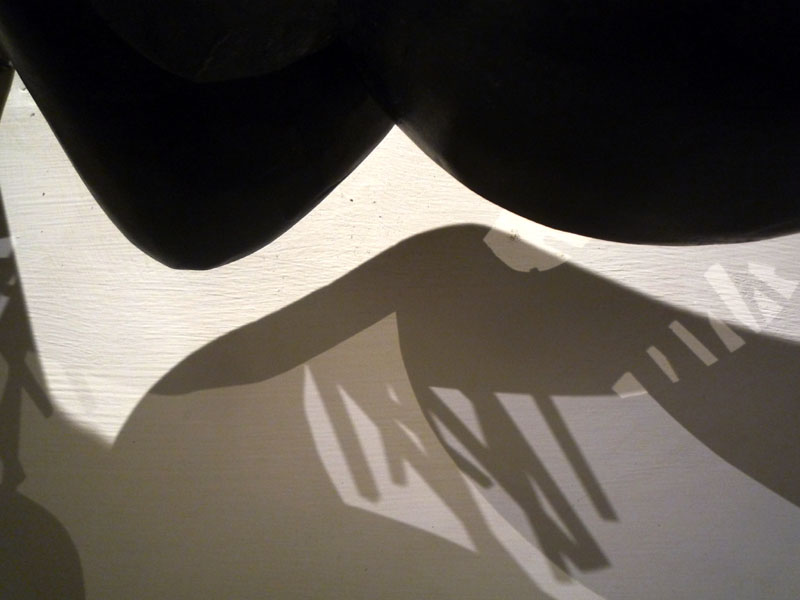
 Shadows of a sculpture piece in a show I saw this weekend.

Thursday, February 23, 2012

Book Making


I had planned to test myself by preparing another talk using that odd machine and my computer, but it seems more practical to demonstrate book making for Carrie and whoever wants to watch and urge the rest of you on with your March 5th project.  

After that there is spring vacation and we miss yet another Monday class.

IF YOU ARE WORKING WITH DIGITAL IMAGES, PLEASE BRING YOUR LAPTOP...
WE NEED TO SAVE ONE COMPUTER FOR ARAN TO USE SINCE HE DOESN'T HAVE A LAPTOP...AND MAYBE FOR TUNISIA ...WHO MIGHT NOT HAVE ONE...

IF THINGS GET TOO CROWDED, WE'LL HAVE TO LIMIT TIME ON THE LIMITED NUMBER OF COMPUTERS...   REMEMBER YOU CAN USE THE PRINTERS DURING LAB TIME...thanks..

So, here are some photographs of specific styles of books in case Carrie wants to think about alternatives to the scrap book.

 This is a very large, heavy "scrap" book that I made for an etching class that I was auditing at UMass. I wanted extremely large pages because I was using etchings with text.

And I was using very heavy, very large board that I bought at a book bindery. It has to be laboriously cut with a matte knife.

The board that you buy in a package in an art store such as Blick is around 13x19, four boards in a package and is much thinner. It's easier to cut, but you can't make a huge book.

There are always end-papers pasted (with a white glue that you very carefully apply over the whole surface) inside the front cover after the outer covering (in this case, a heavy black rice paper). Sometimes you put on a sheet of heavy weight BFK Reeves -- the same paper you've used for the basic book block and then paste the end paper over it. Sometimes you use the BFK Reeves as the end paper. (Take a look at the accordion book and you'll see white end papers..) And you need to make spacers -- the same size as that board that makes the hinge and put one between each sheet because these compensate for the print (height) and the dry-mount tissue.

The scrap book consists of a front and back book board. And then there are two narrow pieces, cut the same width, that create the hinge to allow the cover to open easily. You'll need those two metal whatever-they-are called.  gismos? gromets?....(see top picture.)

The pages are 1/4" smaller on the top and bottom and 1/4" smaller on the right and left sides. In other words, 1/2" smaller than the book board because this protects the pages from being easily damaged.


This is a strap book...though it's easy to make and I made this one during a Workshop that I was teaching a couple of years ago, it's definitely more delicate because the cover is not made of book board but of a heavy paper..    The pages are made by folding each piece of paper in half, twice the length of what you've decided is your cover size...and then binding it through the fold (this has to be seen to be explained easily.)  One advantage is an attractive binding of stitching. But, again, it's fragile.  

I hated the blue coat that I was wearing that winter, so I wanted to make a book about it, using text.

So there were many photographs of me with my usual forlorn expression in that coat and also much smaller images of the coat and the lining, etc...it also functioned as sort of a diary.

This is an accordion book which is actually quite easy to make...Again, it's with a heavy-weight BFK Reeves paper and the images are adhered with dry mount tissue and the dry mount press.

I made it for that same class...using photographs I'd taken in the parking lot when I took a friend to doctor visits...they are digital images and I used photoshop to add text.   As you'll see, the end pages are an extension of the accordion book block.  I don't think anyone in that class was any more interested in my working along with them than most of you are in this blog...but why not do it?

It's possible to make deliberately messy books, but these are examples of quite formal solutions and they are a bit annoying to make because all the pages have to be the same sizes and the glue has to be applied neatly, blah and blah.    If you hate precision, these aren't the books you want to make because they look pretty awful if you're not careful...for instance, folding an accordion book is tricky.